Analyzing Bet Timing Patterns to Identify Recreational Players in Licensed Online Hold'em Rings
Written by Cameron Otto · Aug 26, 2026

Analyzing Bet Timing Patterns to Identify Recreational Players in Licensed Online Hold'em Rings
Bet timing patterns offer measurable indicators that separate recreational players from regulars in licensed online Hold'em rings, and data from multiple regulated markets shows consistent differences in decision speed across player types. Licensed platforms in regions such as New Jersey and Ontario record action timestamps that software aggregates into statistical profiles, allowing observers to track how quickly participants respond to preflop raises, flop continuation bets, and river decisions.
How Timing Data Emerges in Regulated Environments
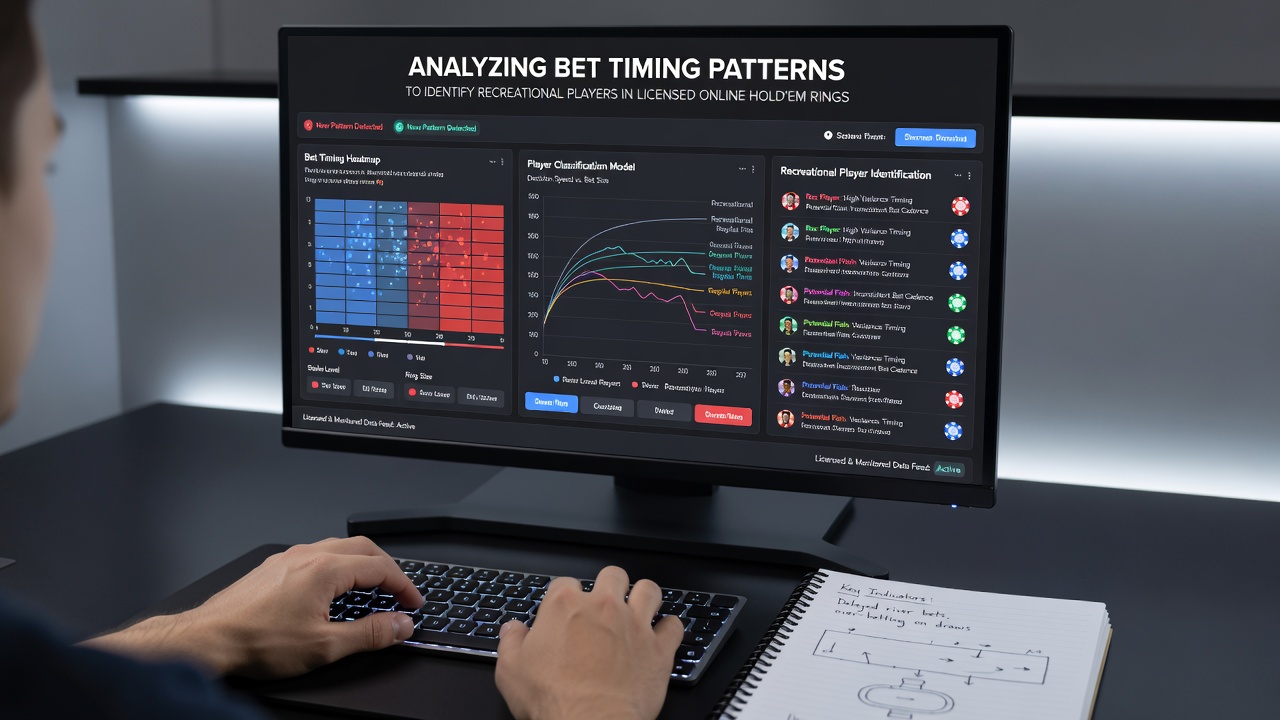
Online poker clients log every decision interval from card delivery to action submission, and these intervals cluster differently depending on experience level. Recreational participants often display wide variance in response times because they weigh emotional factors alongside card values, while regulars maintain narrower ranges that reflect memorized ranges and equity calculations. Research from the New Jersey Division of Gaming Enforcement indicates that average decision times for recreational accounts fluctuate between 4.2 and 11.8 seconds per street, whereas professional accounts stay within 2.1 to 5.7 seconds across comparable hand volumes.
Platform operators must retain these timing logs under licensing rules that require responsible gambling monitoring, which creates datasets researchers can examine for behavioral signatures. Those datasets reveal that recreational players produce longer pauses before large river bets and shorter clicks when folding marginal hands, patterns that emerge repeatedly across thousands of sessions.
Key Timing Signatures Linked to Player Type
Instant preflop folds under three seconds appear more frequently among recreational accounts, especially when facing three-bets in late position. The same players often require extended time before calling large bets on draw-heavy boards, because they lack quick equity assessment tools that regulars apply automatically. Studies of Ontario iGaming traffic show recreational callers spend 35 percent more time on river decisions than on earlier streets, while regulars keep decision duration steady throughout the hand.
Bet sizing combined with timing adds another layer. A recreational player who snap-calls a small flop bet and then tanks on the turn when facing a larger sizing often holds a medium-strength hand that feels uncertain under pressure. Data collected from licensed rings in August 2026 continues to confirm these clusters, with timing variance serving as a stronger filter than raw VPIP or aggression factor alone.
Application in Ring Game Selection and HUD Integration
Players who review hand histories can import timing columns into custom HUDs that flag accounts with high standard deviation in decision speed. Such flags help identify tables where recreational participants cluster, because those tables generate larger average pot sizes and higher rake contributions per hand. Licensed operators in multiple jurisdictions publish aggregate reports that list hand counts and player classification distributions, and timing metrics appear as supplementary fields in several commercial tracking tools.
One documented approach involves setting alerts when an opponent exceeds a personal baseline by more than two standard deviations on any street. This method isolates recreational accounts without requiring manual review of every decision. Figures released by iGaming Ontario for the first half of 2026 show that tables containing three or more high-variance-timing accounts produce 22 percent more hands per hour than tables dominated by low-variance regulars.
Regulatory Context and Data Availability
Licensed platforms must store timing records for audit purposes, and some jurisdictions release anonymized summaries that researchers use to validate player classification models. Australian government reports on interactive gambling note similar timing differentials between recreational and frequent players, though the datasets remain smaller than those from North American markets. Observers note that timing patterns remain stable across different buy-in levels, which allows the same statistical thresholds to apply from micro-stakes to mid-stakes rings.
Because decision timestamps cannot be altered by players without violating client integrity checks, timing data resists manipulation more effectively than voluntary statistics such as fold-to-three-bet percentages. This resistance makes timing analysis a reliable supplement to traditional HUD metrics in environments where operators enforce strict software verification.
Conclusion
Timing pattern analysis supplies licensed online Hold'em operators and players with an additional classification layer that distinguishes recreational accounts through measurable response intervals. Aggregated data from regulated markets demonstrates repeatable differences in decision speed that align with observed playing styles and pot outcomes. As record-keeping requirements persist across jurisdictions, timing statistics continue to expand the available toolkit for identifying player types in ring games.