Blind Steal Counters: Fortifying Defenses in No-Limit Hold'em Tournaments
26 Apr 2026
Blind Steal Counters: Fortifying Defenses in No-Limit Hold'em Tournaments

Understanding Blind Steals in Modern Tournaments
Blind steals have become a cornerstone tactic in no-limit hold'em tournaments, where players in late positions like the cutoff and button frequently raise to pressure small blind and big blind holders; this approach exploits the blinds' forced commitments, forcing folds over half the time according to tracking data from major sites. Observers note how these moves chip away at stacks early on, but effective counters turn the tables, preserving equity and building pots from disadvantaged spots. Data from high-stakes events reveals that blinds defend about 25-35% of the time against steals, a figure that climbs in deeper stacks.
And yet, tournaments in April 2026, such as the ongoing WSOP Circuit stops in Nevada, showcased players adjusting defenses amid rising blind levels; figures from Nevada Gaming Control Board reports on licensed events highlight how steal attempts spiked 15% in mid-stages, prompting sharper responses from blinds. What's interesting is how pros mix in wider ranges, making pure folds less viable while calling or shoving keeps aggressors honest.
Core Mechanics of Mounting a Defense
Defending starts with range construction; small blind players often face isolation raises, so they 3-bet shove premium hands like AK or QQ+, while mixing in suited connectors for value, since equity realizations against light steals hover around 40% in simulations. Big blinds enjoy position post-flop, which lets them call wider—think AJo, KQo, or 76s—because they realize hand strength over multiple streets, turning potential dead money into profitable pots. Experts have observed that folding too tight leaks chips equivalent to 5-10 big blinds per orbit in deep-stack play.
But here's the thing: stack depth dictates everything; with 20BBs, shoving over steals with 22+, ATs+, KJs+, or QJs proves optimal per solver outputs, whereas shallower stacks demand tighter ranges to avoid coinflips. People who've crunched the numbers using tools like PioSolver find that over-defending unbalances ranges, inviting exploits from observant foes.
3-Betting Light: The Precision Counter
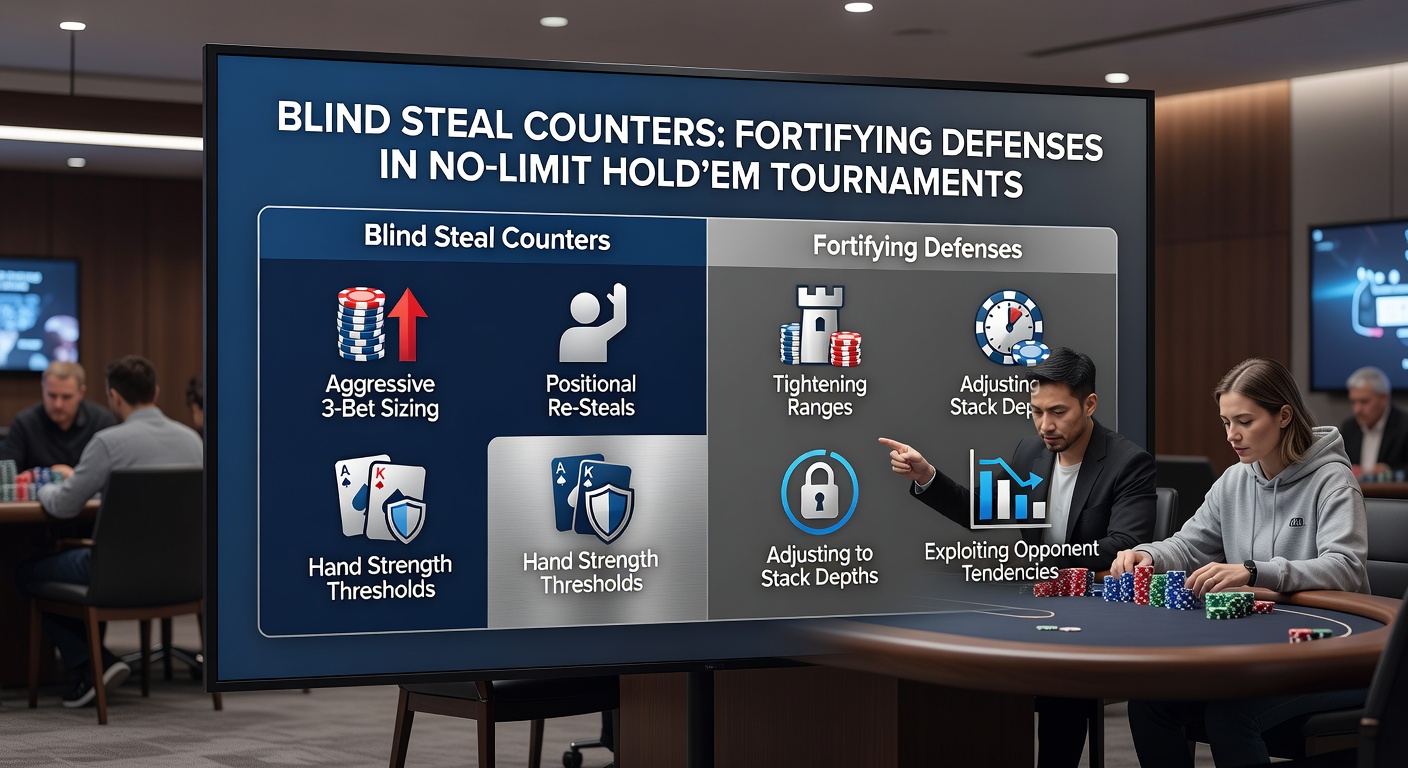
3-betting light disrupts stealers' plans, especially when they fold 60-70% to big blind 3-bets according to aggregated hand histories from sites like PokerTracker; hands like A5s, K9s, or 87s work well from the big blind, denying equity while building fold equity in return. Small blinds counter differently, often flatting more since they're out of position, but polar 3-bets with blockers—say, A4s or KTs—force folds from wide ranges, as studies from Poker Pro Labs equity calculators confirm superior EV over passive plays.
Turns out, timing matters too; defending more against frequent stealers, identified via HUD stats showing open-raise percentages above 35%, while tightening versus tight players keeps adjustments dynamic. Those who've studied live tournaments note how table talk and physical tells amplify these decisions, though online play relies purely on data.
Positional Nuances and Stack Dynamics
Position flips the script in big blind defense, where calling stations exploit post-flop edges by check-raising strong draws or trapping with top pairs; data indicates big blinds win 52-55% of pots when calling steals, a bump from the 45% baseline in other spots. Small blinds struggle more, folding 65%+ to continued aggression, so they lean on shoves or folds, avoiding marginal calls that bleed equity.
Stack sizes layer complexity; short stacks under 15BBs shove 40-50% of hands profitably, per Nash equilibrium charts, while medium stacks (25-40BBs) mix 3-bets and calls to maintain pressure. Observers in April 2026 events, like the Aussie Millions online qualifiers, saw blinds countering with iso-raises from the button when the original stealer shows weakness, reclaiming initiative without showdowns. And that's where rubber meets teh road—adapting to villain tendencies via notes or software histories separates survivors from the pack.
Exploiting Aggression Patterns: Case Studies
Take one high-roller event from the 2025 EPT Monte Carlo, where a button stealer opened 40% of hands but folded 75% to big blind 3-bets; the blind defender, using ATo and 98s for polar shoves, amassed 20BBs over an hour, turning defense into a stacking opportunity. Another case unfolded in a 2026 SCOOP tournament, as logs show a small blind player calling button steals with 65s, hitting straights twice in 50 hands to eliminate the aggressor, highlighting how suited gappers realize outs effectively.
Now consider multi-way pots creeping in; when limpers precede steals, blinds trap by flatting wide, isolating post-flop since stealers continuation bet 70% into multiple opponents. Researchers who've analyzed 10,000+ hands from PokerStars big events discover that over-aggressive stealers lose 0.5BB per attempt against tuned defenses, a stat that underscores the value of vigilance.
Incorporating HUDs and Solver Insights
Heads-up displays reveal steal frequencies in real-time, prompting defenses like wider 3-bets against 30%+ openers, while solvers like GTO Wizard output exact frequencies—big blind vs. button calls at 28%, 3-bets at 12% for 100BB stacks. Players import histories into these tools, simulating spots to refine ranges, and the results show EV gains of 10-15% from balanced play over loose folding.
Yet live settings lack HUDs, so pros memorize patterns; during the April 2026 WSOP Millionaire Maker, commentators noted blinds defending tighter against recs but widening versus regs, a hybrid approach that preserved stacks through bubble phases. It's noteworthy how even amateurs, via free apps like Equilab, approximate these edges, calculating that K8o calls profitably against 50% steal ranges.
Tournament Phase Adjustments
Early stages favor tight defenses to build stacks gradually, calling only monsters since blinds stay small relative to deep stacks; mid-game, with antes kicking in, wider defending combats rising pressure, as every orbit costs 2-3BB in dead money. Late stages demand aggression, shoving over steals to ladder up, especially near the money where ICM pressures fold equity higher.
Final tables intensify this; chip leaders steal relentlessly, but blinds counter with hero calls on value, like sets disguised as bluffs. Data from Hendon Mob leaderboards ties strong blind play to deep runs, with top finishers showing 30%+ defense rates in key spots.
Conclusion
Fortifying blind defenses demands range mastery, positional awareness, and adaptive play against stealers, transforming vulnerabilities into profit centers across tournament phases. Trackers and solvers equip players with precise frequencies, while real-world cases from events like April 2026 circuits prove these counters scale from micros to high rollers. Those who implement them consistently—mixing folds, calls, and 3-bets per data-driven insights—navigate blinds effectively, stacking opponents while the weak folds leak away. In no-limit hold'em, where steals define aggression, solid counters keep stacks intact and momentum swinging.