29 May 2026
Decoding how affiliate tracking tools reshape hold'em player retention across state-regulated platforms

State-regulated hold'em platforms rely on affiliate tracking tools to monitor player journeys from initial click through long-term engagement, and these systems collect data on deposits, session lengths, and game preferences while players move between cash games and tournaments. Observers note that such tools use unique identifiers and cookie-based pathways to attribute activity back to specific marketing partners, which allows operators to adjust bonus offers and loyalty rewards based on what the data reveals about individual behavior patterns.
How tracking systems operate within regulated environments
Affiliate networks integrate with poker software through APIs that record every hand played, every tournament entry, and every cash deposit under strict compliance rules set by state gaming authorities. Researchers have documented that these platforms generate daily reports showing which traffic sources produce players who stay active beyond the first thirty days, and operators then refine their retention campaigns accordingly. Data from multiple jurisdictions indicates that players acquired through tracked affiliate links often receive personalized freerolls or rakeback adjustments within the first week, which correlates with higher login frequency compared to untracked organic sign-ups.
Platforms in states like New Jersey and Pennsylvania deploy these tools alongside age-verification and geo-fencing protocols, ensuring that every tracked session remains within legal boundaries while still capturing granular metrics on hold'em variants such as no-limit and pot-limit games. The systems flag when a player reduces activity after a certain number of sessions, prompting automated messages or targeted promotions that reference the player's historical win rate or preferred stake levels.
Retention patterns linked to affiliate data streams
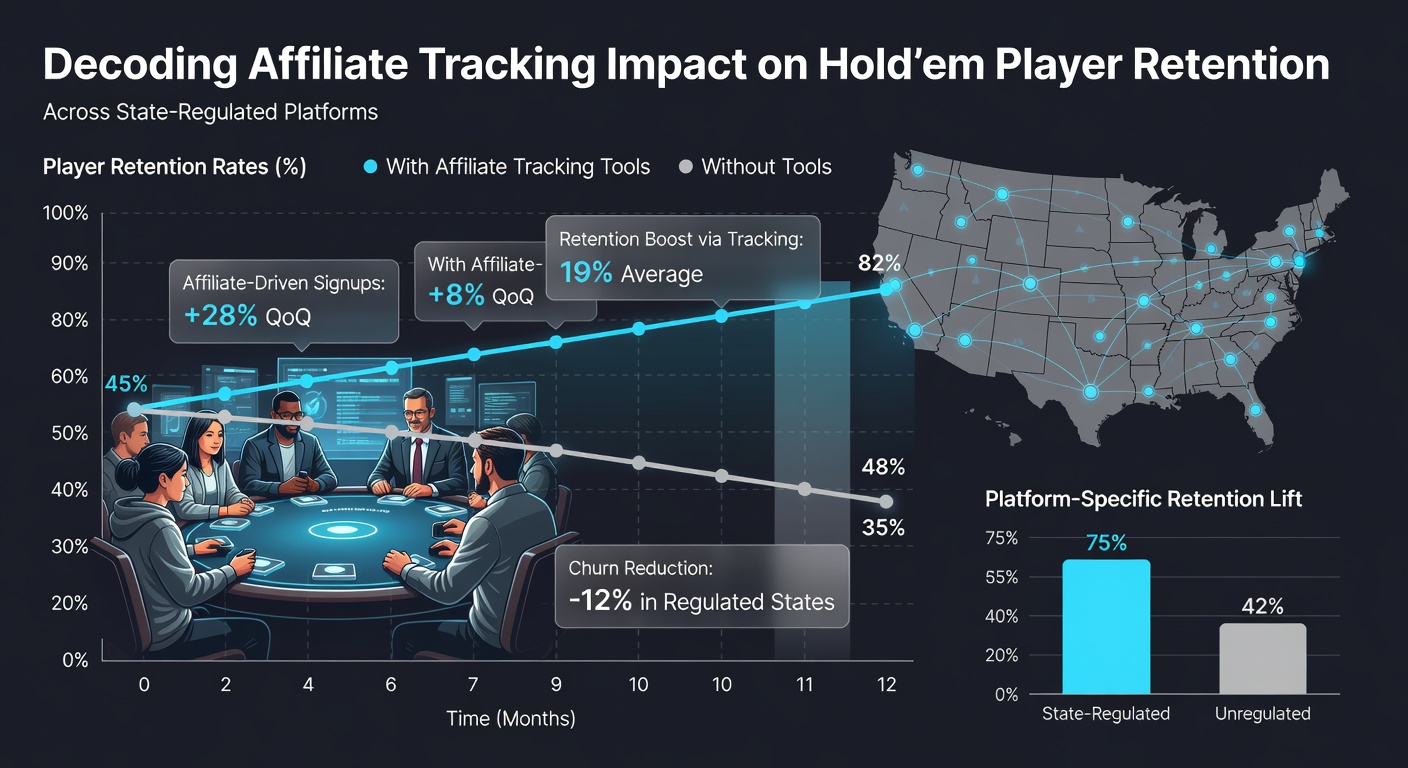
Operators examine retention cohorts segmented by affiliate source, and figures reveal that certain marketing partners deliver players who maintain consistent bankrolls over six-month periods while others show sharp drop-offs after promotional periods end. Studies conducted by academic teams at institutions focused on gaming economics have tracked these differences across thousands of accounts, noting that tracking granularity allows operators to shift marketing spend toward sources that yield longer average player lifetimes. In May 2026, several state platforms updated their affiliate reporting dashboards to include real-time churn predictions derived from machine learning models trained on historical hold'em data.
One documented approach involves layering retention incentives based on the affiliate channel's performance history, so that players from high-retention partners receive earlier access to exclusive sit-and-go events while those from lower-performing sources receive standard reload bonuses. This segmentation does not alter game fairness but reallocates promotional resources according to observed engagement curves.
Regulatory oversight and cross-state variations
Each state maintains its own data-sharing requirements for affiliate activity, and regulators review aggregated retention statistics to confirm that promotional tools do not encourage excessive play. According to information released by the New Jersey Division of Gaming Enforcement, tracked affiliate players accounted for measurable portions of total hold'em handle during recent reporting periods, with retention rates varying by traffic source. Platforms must store these records for audit purposes, which creates standardized datasets that researchers can analyze to identify broader trends across multiple regulated markets.
Operators in Michigan and West Virginia apply similar tracking frameworks yet adjust parameters to match local player demographics, and comparative reports show that retention improvements appear when affiliates receive performance-based payouts tied to thirty-day and ninety-day active player counts rather than solely to initial deposits. These adjustments occur through contractual updates between operators and affiliate networks, all documented within the compliance logs submitted to state authorities.
Technical integration with poker software
Modern tracking solutions embed unique sub-IDs within referral links that persist across devices when players transition from desktop clients to mobile apps, and this continuity supports consistent reward delivery regardless of access method. Software providers update their systems periodically to accommodate new tracking parameters while maintaining encryption standards required by state regulations. Observers have recorded that these updates often coincide with expanded tournament schedules, allowing operators to test whether certain affiliate cohorts respond more favorably to multi-table events versus single-table sit-and-gos.
Retention tools also monitor rake generated per player and correlate it with affiliate origin, which helps determine whether volume-based rewards or loyalty point multipliers produce better long-term engagement. The resulting datasets feed into broader business intelligence platforms used by marketing teams to forecast monthly active user counts across all state-regulated hold'em offerings.
Conclusion
Affiliate tracking tools continue to supply state-regulated hold'em platforms with detailed retention metrics that shape how operators allocate bonuses and design loyalty programs. Data collected through these systems supports compliance reporting while informing decisions about which traffic sources merit continued investment. As platforms in additional states launch or expand operations, the same tracking frameworks provide consistent measurement standards that allow operators to compare performance across jurisdictions and refine their approaches based on observed player behavior patterns.