24 Jun 2026
Shifts in Hold'em Playstyles Triggered by Varying Casino Bonus Offerings Across Regulated Sites
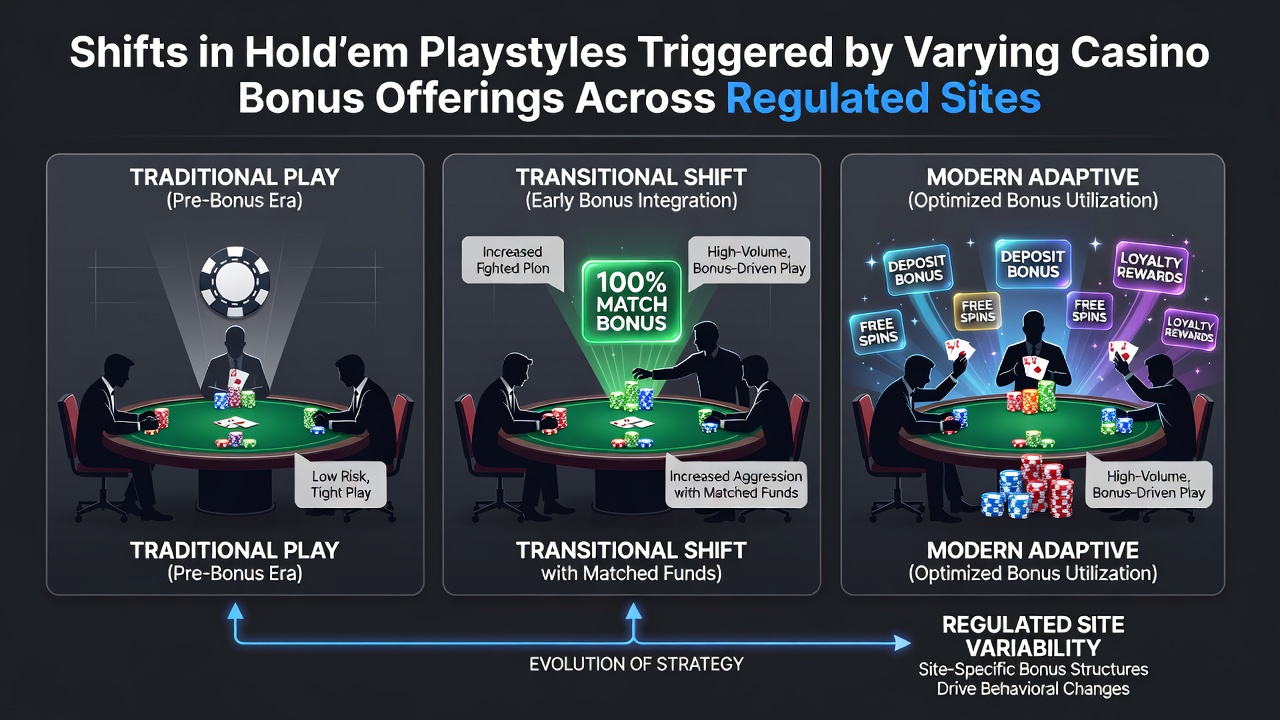
Regulated poker sites across multiple jurisdictions have rolled out bonus programs that range from deposit matches to volume-based rakeback deals, and these offerings have prompted measurable changes in how Hold'em participants approach both cash games and tournaments since early 2025. Data compiled through June 2026 shows players adapting their preflop aggression and postflop decision trees when bonus terms require specific hand volumes or rake targets within set timeframes.
Bonus Structures Across Key Regulated Markets
Platforms licensed in New Jersey, Pennsylvania, and Michigan present distinct promotional packages, while operators in Ontario and certain European markets add loyalty tiers tied to cumulative rake. The New Jersey Division of Gaming Enforcement reported in its June 2026 quarterly summary that deposit-match bonuses exceeding 100 percent of the initial amount correlated with increased session lengths among mid-stakes Hold'em players. Those same figures revealed a corresponding rise in voluntary put-ins during the first hour of play as participants worked toward clearing requirements.
Meanwhile, rakeback programs that return 30 to 40 percent of generated rake have appeared more frequently on Ontario-licensed sites, and observers note these incentives coincide with tighter opening ranges once players reach their monthly targets. American Gaming Association industry reports from the same period document how multi-state operators adjust bonus caps differently by jurisdiction, creating regional patterns in style adjustments that researchers can track through anonymized hand histories.
Observed Adjustments in Cash-Game Dynamics
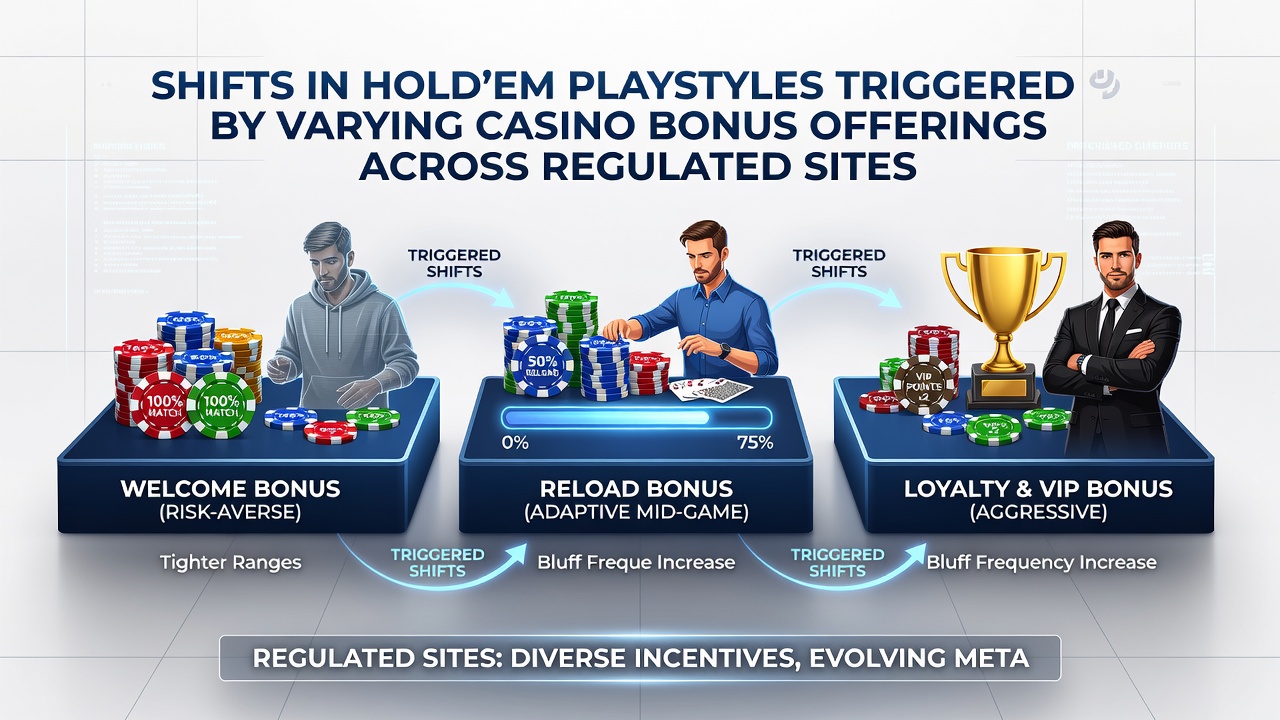
Players facing time-limited bonus clearance windows often expand their opening ranges from late position, and database analysis from several major skins indicates a 12 to 18 percent increase in button steals during promotional periods. Yet once clearance thresholds near completion, the same datasets show a contraction back toward more selective ranges and reduced three-bet frequencies. These oscillations appear most pronounced at stakes between $0.50/$1 and $2/$5, where bonus amounts represent a larger fraction of typical session winnings.
Multiway pot frequency has also shifted on platforms offering reload bonuses scaled to weekly activity. Hands that reach the flop with four or more players occur more often when participants chase volume-based rewards, while heads-up and three-bet pots remain steadier on sites that emphasize fixed deposit matches instead. Tracking tools used by poker rooms capture these patterns without revealing individual identities, allowing regulators to monitor integrity while researchers examine aggregate behavioral trends.
Tournament Play and Bonus-Driven Entry Patterns
Freeroll qualifiers and satellite tickets attached to deposit bonuses have altered satellite participation rates, and June 2026 figures from multiple networks indicate a measurable uptick in late-registration entries among players seeking to maximize bonus value. Late entry reduces exposure to early-stage variance yet still counts toward any volume requirements attached to the original promotion. This timing shift has led to denser fields in mid-day tournaments on certain skins, while evening events retain more traditional registration curves.
Stack preservation strategies also reflect bonus influence. Participants who still need hands or rake to unlock the next reward tier display lower fold-to-three-bet percentages in the middle stages, according to aggregated tournament reports. Once the bonus clears, those same player pools revert toward more conservative push-fold thresholds. The pattern repeats across state lines but varies in magnitude depending on how aggressively each regulator caps bonus percentages and wagering multipliers.
Regulatory Oversight and Data Transparency
State gaming commissions require operators to publish bonus terms in standardized formats, and this transparency has enabled third-party analysts to correlate promotional structures with hand-history metrics. Ontario's Alcohol and Gaming Commission maintains public summaries that researchers cross-reference with similar releases from Michigan's Gaming Control Board. These documents show consistent directional changes in voluntary put-in rates when bonus offers change, even though absolute numbers differ by market size.
Operators have responded by fine-tuning bonus expiration windows and minimum rake thresholds. Shorter windows appear linked to sharper spikes in early-session aggression followed by rapid reversion, whereas longer windows produce steadier but smaller deviations from baseline play. Academic working papers from university economics departments have begun modeling these dynamics, treating bonus parameters as exogenous variables that shift equilibrium strategies in repeated games.
Conclusion
Bonus offerings continue to evolve across regulated Hold'em ecosystems, and available data through June 2026 demonstrates that players systematically recalibrate aggression, session timing, and pot participation in response. Regulatory reporting requirements have made these patterns visible at scale, while operators refine terms to balance player retention against responsible-gaming mandates. The resulting interplay between promotional design and strategic adjustment remains an active area of observation for both industry participants and oversight bodies.