17 Jun 2026
Spotting Patterns in Session Timing Linked to Daily Reset Cycles Across Networked Card Rooms
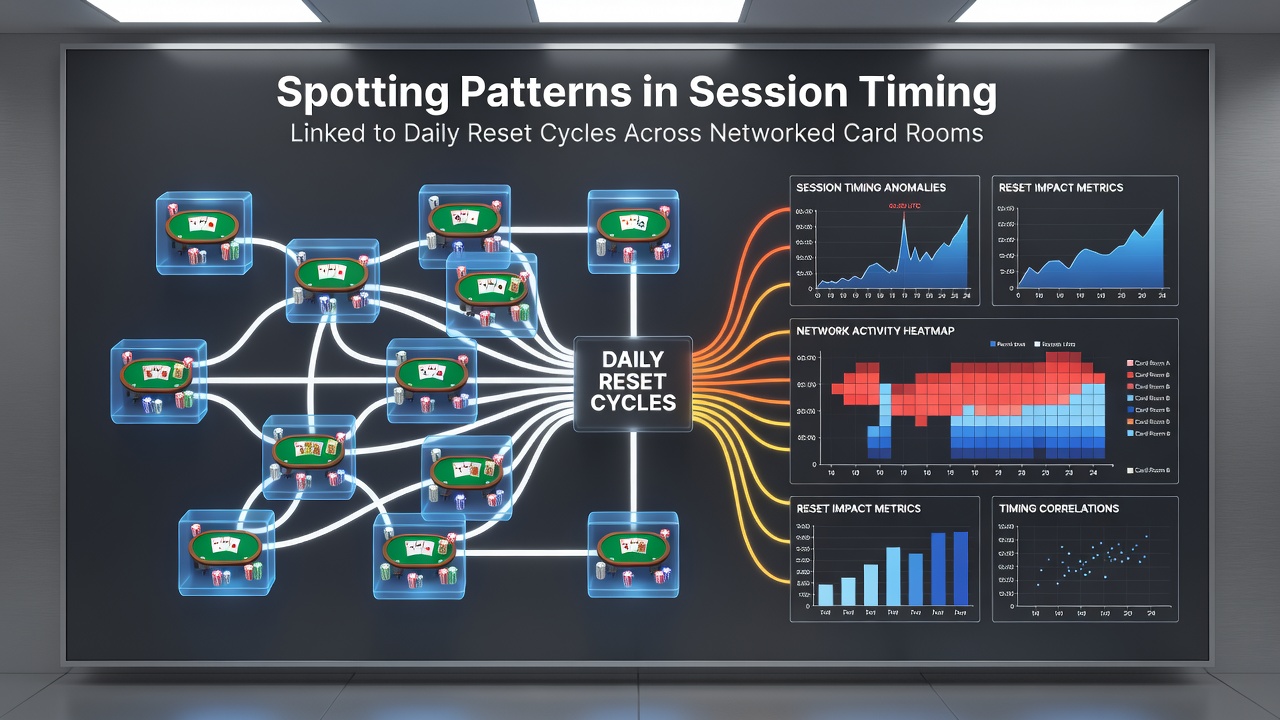
Networked card rooms operate across multiple jurisdictions and platforms where daily reset cycles shape player activity in measurable ways. These resets typically occur at midnight in each local time zone or at standardized server times, triggering the refresh of leaderboards, bonus accruals, and promotional qualifiers that many players track closely. Observers note consistent shifts in login volumes and session durations that align with these cycles rather than random fluctuations.
Understanding Daily Reset Mechanics in Connected Networks
Daily resets function as fixed points in the operational calendar of integrated poker networks, where rake calculations, loyalty points, and tournament ticket distributions restart. Data from multi-state platforms shows that players often adjust their entry and exit times to capture full cycles of these rewards or to position themselves ahead of new leaderboard periods. Researchers tracking aggregated traffic patterns have identified clusters of session starts occurring in the hours immediately preceding reset times, followed by noticeable drop-offs once the cycle completes.
Network operators maintain synchronized clocks across servers to ensure consistent reset enforcement, yet regional time differences create staggered effects. Players in eastern zones finish sessions earlier relative to western counterparts on the same network, producing observable waves of activity that migrate across time zones. This synchronization allows analysts to map precise intervals where engagement peaks and troughs align with reset schedules rather than external factors such as major sporting events.
Observed Timing Patterns Among Regular Participants
Session data collected over multi-month periods reveals recurring behaviors tied directly to reset triggers. Many participants log in during late evening windows to maximize overlap with both current and upcoming cycles, extending play until shortly after the reset registers new qualifying activity. Shorter sessions cluster around midday resets in certain networks, where players target specific promotional windows before disengaging once those windows close.
Analysts examining hand histories across platforms have documented increased table-switching frequency in the final ninety minutes before resets, suggesting players seek optimal table conditions during these compressed periods. Post-reset intervals show steadier, longer-duration sessions as participants settle into fresh cycles without the pressure of expiring qualifiers. These patterns hold across both cash game rings and scheduled tournament lobbies within the same networked environments.
Regional Variations and Network-Wide Trends in Mid-2026
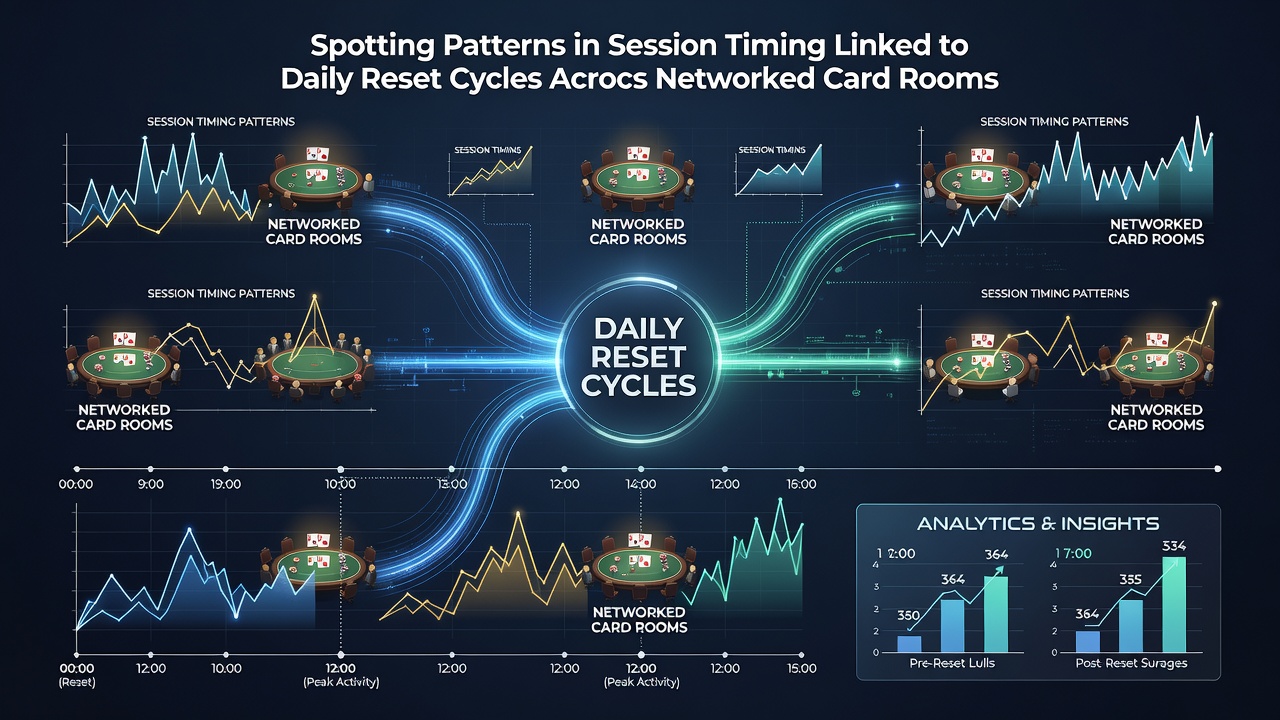
By June 2026, traffic monitoring across North American and European networked rooms highlighted distinct geographic signatures in reset-linked timing. Platforms serving regulated markets in New Jersey and Pennsylvania displayed pronounced pre-reset surges between 10 p.m. and midnight Eastern Time, while Canadian-facing networks showed similar activity shifted to match local midnight boundaries. European rooms integrated with shared liquidity pools exhibited more distributed patterns due to multiple overlapping time zones.
According to figures released by the New Jersey Division of Gaming Enforcement, average session lengths increased by measurable margins in the days following major promotional resets during the spring leading into summer. Comparable reports from the Alcohol and Gaming Commission of Ontario noted parallel adjustments among players utilizing cross-border network access. These shifts occurred independently of broader volume changes, pointing to deliberate timing strategies rather than organic growth.
Tools and Metrics Used to Identify Reset Correlations
Modern tracking suites employed by network analysts incorporate timestamp granularity down to the minute, allowing correlation between individual player actions and reset events across thousands of tables simultaneously. Heat maps generated from these datasets illustrate recurring entry spikes at 23:45 and 00:15 server time in many configurations, with corresponding exit clusters appearing thirty to forty-five minutes later. Such granularity helps distinguish reset-driven behavior from other variables like blind level increases or table balancing routines.
Third-party research groups studying anonymized telemetry have cross-referenced these timing markers against player classification tags, revealing that mid-stakes regulars exhibit tighter adherence to reset windows compared with recreational visitors. Tournament specialists demonstrate even sharper clustering around daily satellite reset periods, often compressing registration windows into narrow pre-reset bands. These differentiated patterns emerge consistently when datasets span multiple months rather than isolated snapshots.
Conclusion
Session timing patterns linked to daily reset cycles represent a structural feature of networked card room operations rather than isolated anomalies. As platforms continue expanding interconnected liquidity and synchronized promotions, the precision of these timing alignments is likely to increase. Continued monitoring through established regulatory channels and independent analytics provides ongoing visibility into how reset mechanics influence participation rhythms across diverse player segments and geographic zones.