22 May 2026
The Evolution of Hold'em Bankroll Tactics When Casino Affiliates Reshape Bonus Structures
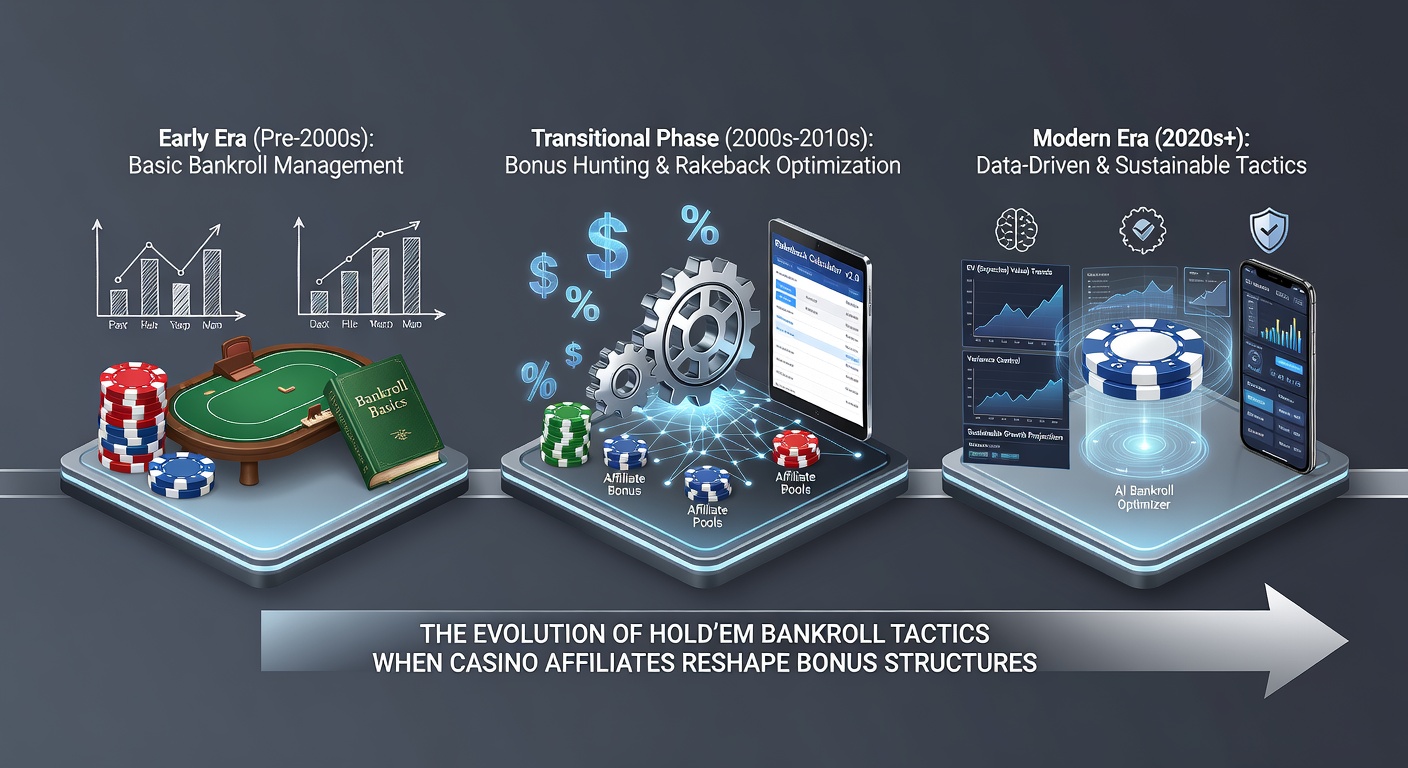
Texas Hold'em players have long relied on disciplined bankroll management to navigate the swings of cash games and tournaments yet the rules keep shifting as casino affiliates overhaul bonus structures across major online platforms. Data from industry tracking services shows that wagering requirements on welcome bonuses have tightened from 20x to 35x in many regions since 2022 while cashback offers now tie directly to rake contributions rather than flat deposit matches. Those adjustments force grinders to recalculate their effective bankroll before sitting down at any table.
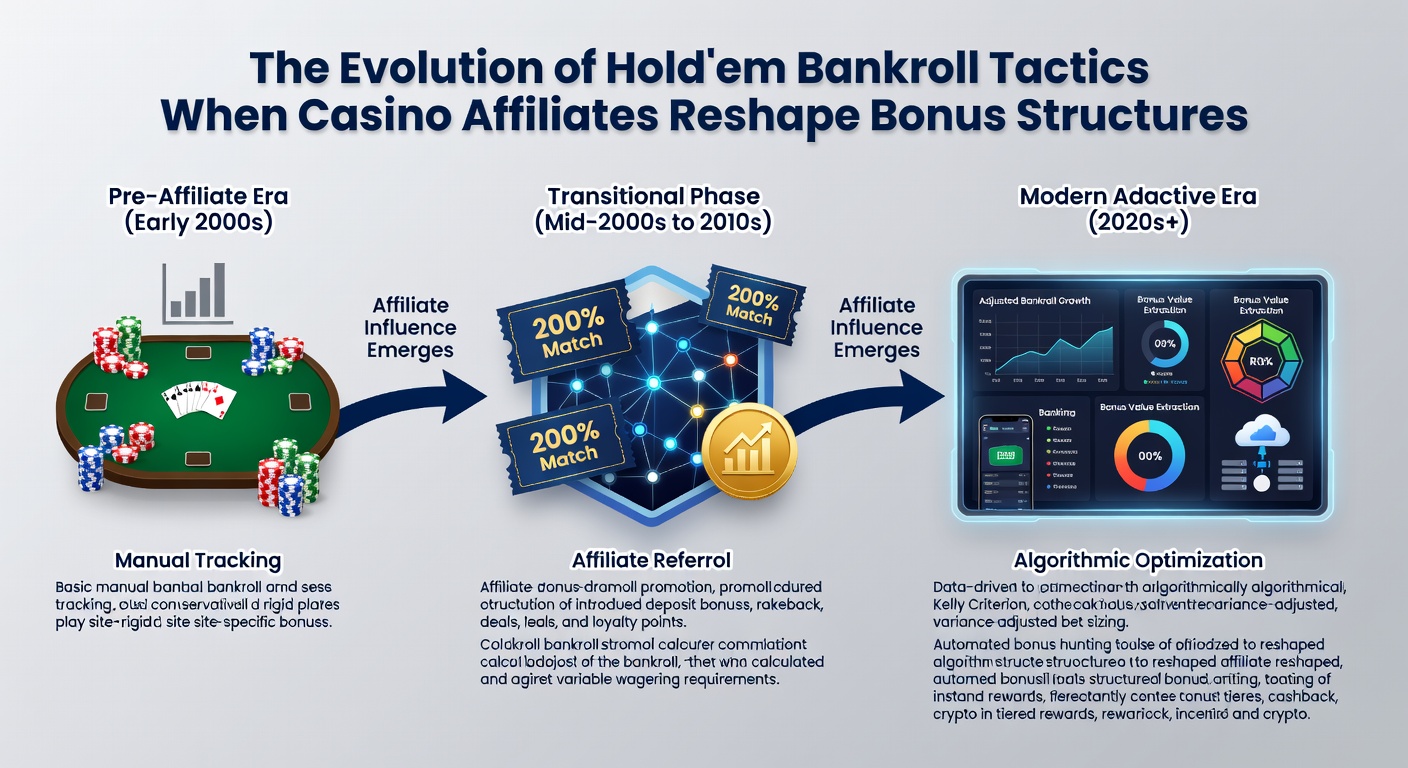
Early bankroll guidelines emerged in the mid-2000s when online poker rooms offered simple 100 percent deposit bonuses with minimal strings attached. Players typically reserved 20 to 30 buy-ins for cash games and 50 to 100 for multi-table tournaments according to basic variance models shared on forums and strategy sites. Affiliates promoted these deals through revenue-share deals that rewarded volume so the focus stayed on acquiring new depositors rather than retaining long-term players through complex reward tiers.
Shifts Triggered by Affiliate Marketing Models
Affiliate programs began reshaping bonus architecture around 2015 when revenue-share percentages climbed and operators started layering loyalty points on top of initial offers. Research from the American Gaming Association indicates that affiliate-driven traffic accounted for nearly 40 percent of new poker accounts by 2018 which pushed sites to introduce play-through conditions that stretched across multiple deposit cycles. Players who once treated bonuses as free bankroll extensions now had to track pending wagering separately from their core stack.
By 2023 many platforms replaced large upfront bonuses with ongoing rakeback deals ranging from 20 to 40 percent depending on volume. This change altered the math because players could no longer count on a single large injection to pad their reserves. Instead they spread smaller weekly or monthly returns across sessions while maintaining stricter separation between bonus funds and real-money holdings to avoid mixing variance sources.
Current Practices Observed in Mid-2026
Reports released in May 2026 by state regulators in Nevada and New Jersey reveal continued refinement of affiliate incentives with several operators capping maximum bonus value at 500 dollars while extending expiration windows to 90 days. Those modifications encourage players to adopt segmented bankroll strategies where one portion covers standard variance and another portion absorbs the slower release of affiliate-sourced rewards. Observers note that successful grinders now maintain spreadsheets that calculate effective stack sizes after subtracting pending play-through amounts.
What's interesting is how tournament specialists have responded. Many now allocate 150 buy-ins instead of 100 when entering series that coincide with affiliate reload campaigns because the added volume requirements can delay cashouts for weeks. Cash-game regulars meanwhile have shifted toward shorter sessions that maximize rake generation during bonus windows while preserving the bulk of their bankroll for non-bonus play.
Regional Regulatory Influences on Bonus Design
Canadian provincial frameworks and Australian state guidelines have further diversified bonus formats with some jurisdictions requiring clearer disclosure of affiliate compensation structures. A study published by the University of Nevada Reno gaming research center in early 2026 documented how these transparency rules reduced the average bonus size yet increased player retention rates by nearly 12 percent over the prior year. The data suggests that clearer terms allow more accurate forecasting of when bonus funds become withdrawable which in turn supports tighter bankroll controls.
Players operating across multiple sites now track affiliate-specific terms in dedicated folders because rollover rates and game-weighting formulas differ sharply between platforms. One common adaptation involves setting aside a separate reserve equal to 15 percent of total bankroll to cover any unexpected extension of wagering deadlines that affiliates sometimes negotiate with operators during promotional periods.
Practical Adjustments and Tracking Methods
Software tools that integrate directly with poker tracking databases now include bonus calculators that adjust session results for pending play-through. Those who have adopted these systems report maintaining win-rate targets that factor in the slower release schedule of affiliate rewards rather than treating every bonus dollar as immediately accessible. The approach reduces the risk of dipping into core reserves when a large cashout is delayed by ongoing requirements.
Network-wide changes continue to appear as operators test hybrid models that combine small deposit matches with tiered cashback ladders. Figures from European trade associations show that sites using these ladders experienced a 9 percent increase in average session length during the first quarter of 2026 which indirectly affects how much bankroll players need to weather downswings while completing the associated tiers.
Conclusion
Bankroll tactics in Hold'em continue to evolve alongside affiliate-driven bonus structures with players incorporating segmented reserves, adjusted buy-in multiples, and digital tracking tools to maintain stability. Regulatory updates across North America and Australia have encouraged clearer terms that support more precise calculations while the underlying need for variance buffers remains constant. Those who monitor both platform policies and affiliate compensation models gain the clearest picture of how much capital truly sits behind each session.