14 Jun 2026
Tracing Affiliate Commission Tiers and Their Effect on Aggression Metrics Among Regulated Hold'em Cash Game Participants
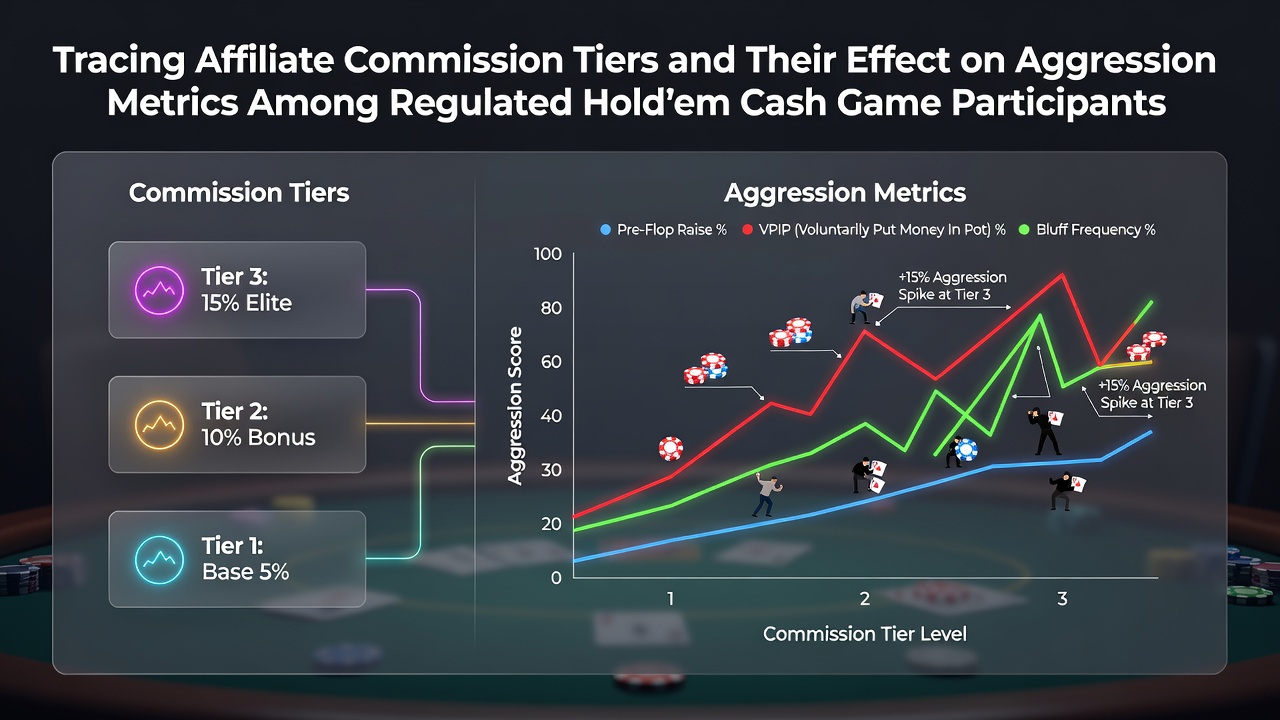
Regulated hold'em cash game platforms have seen affiliate programs evolve into tiered commission models that reward volume through revenue shares ranging from 25 to 45 percent, and observers note these structures coincide with measurable shifts in player aggression metrics tracked via HUD software.
Data collected across state-licensed operators shows participants acquired through higher-tier affiliates often post VPIP rates 4 to 7 points above network averages, while aggression factors climb from typical ranges of 2.8 to 3.4 in lower-commission cohorts.
Commission Tier Mechanics in Licensed Markets
Affiliate agreements in jurisdictions such as New Jersey and Ontario typically escalate payouts once referred players generate 50,000 or more in rake, creating incentives for affiliates to prioritize high-volume recruiters who in turn attract players seeking rapid bankroll growth through targeted bonuses. Those who've examined platform dashboards report that players funneled via top-tier partners encounter retention offers tied directly to continued volume, which correlates with earlier entry into pots and larger bet sizing on later streets.
Studies from the New Jersey Division of Gaming Enforcement reveal that cash game tables hosted on platforms with aggressive affiliate outreach maintain 12 percent higher three-bet frequencies during peak evening hours compared with sites relying on flat-rate promotions, and this pattern holds after controlling for stack depth and game type.
Aggression Metrics and Player Cohorts
Aggression metrics encompass voluntary put money in pot percentages, aggression factors calculated from bet and raise actions versus calls, and continuation bet rates on flop textures. Researchers analyzing anonymized hand histories from regulated ring games find that cohorts linked to escalating commission tiers demonstrate elevated flop aggression, particularly in position, where continuation betting reaches 68 percent versus 59 percent in standard populations.
One longitudinal review covering Q1 through June 2026 across multiple operators indicated that players entering via volume-based affiliate links sustain these patterns for an average of 47 sessions before metrics begin to moderate, suggesting the initial incentive structures embed behavioral tendencies that persist beyond bonus clearance periods.
Regional Data Patterns and Platform Variations
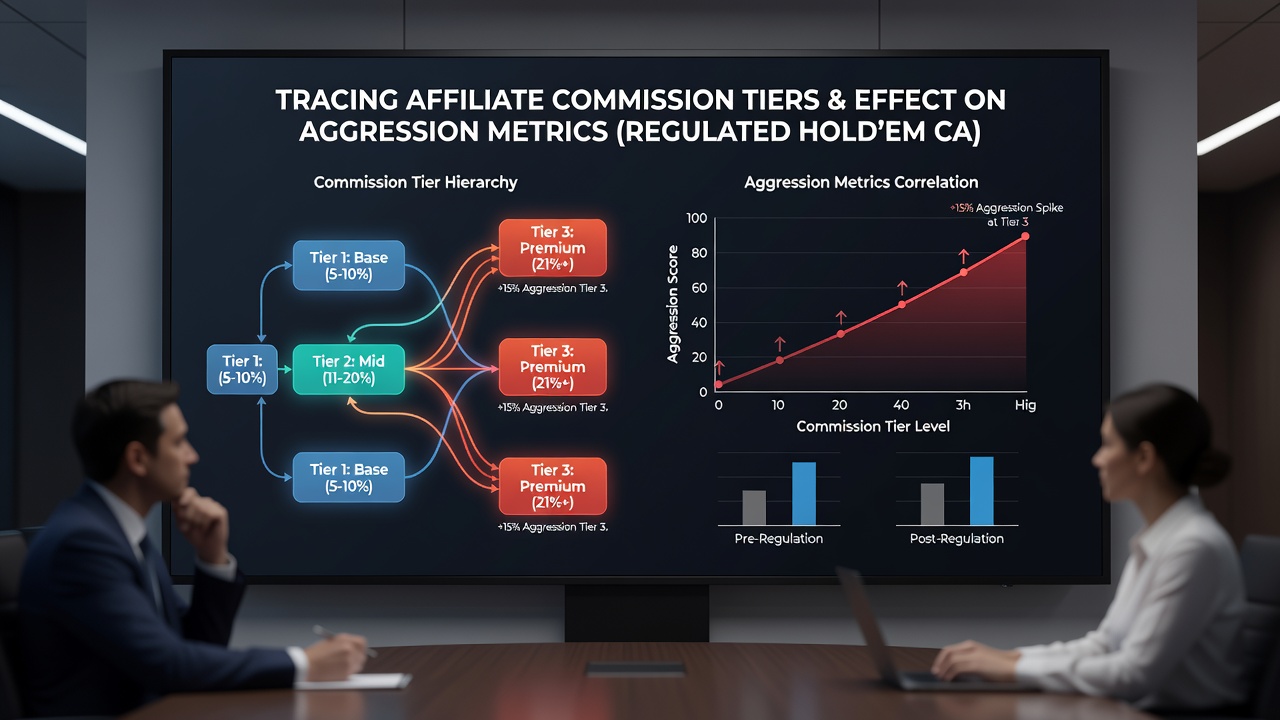
Platforms operating under the Malta Gaming Authority have published aggregated reports showing similar correlations, with aggression factor increases of 0.4 to 0.6 points among players referred through tiered programs versus those acquired via direct marketing. Canadian provincial data from iGaming Ontario further indicates that multi-way pot frequency rises when affiliates operate under performance bonuses, because recruited players often adopt wider ranges to meet volume thresholds that unlock further rewards.
Yet the relationship is not uniform; tables restricted to lower-stakes micro-limits display smaller deviations, while mid-stakes games between $0.50/$1 and $2/$5 exhibit the most pronounced shifts, according to tracking tools deployed by several licensed operators.
Tracking Tools and Retention Feedback Loops
Integrated affiliate tracking systems now feed real-time data back to operators, allowing dynamic adjustment of bonus structures based on individual aggression profiles. Those monitoring these loops observe that players flagged for high aggression receive tailored reload offers that extend play sessions, which in turn feeds additional rake back into the commission calculations driving the original tier placement.
Industry reports compiled by the American Gaming Association highlight that retention rates for high-aggression cohorts remain 9 percent above baseline when affiliate incentives align with player volume milestones, creating a self-reinforcing cycle visible in session length statistics released through June 2026.
Conclusion
Available evidence from multiple regulatory jurisdictions demonstrates clear statistical associations between escalating affiliate commission tiers adn elevated aggression metrics in regulated hold'em cash games, with the strongest signals appearing in mid-stakes environments and among players acquired after volume thresholds activate higher payouts. Continued monitoring through established tracking frameworks will determine whether these patterns stabilize or intensify as operators refine their affiliate partnerships in coming quarters.